After heavy monsoon rain in Albuquerque, check for ceiling stains, musty odors, missing shingles, damaged flashing, clogged gutters, and standing water on flat roofs. These signs point to monsoon roof damage. Schedule a professional inspection right away if you notice any of them.
Heavy monsoon rain can cause hidden monsoon roof damage across Albuquerque homes. Some warning signs show up fast. Others take days to appear.
Why Albuquerque Roofs Suffer Monsoon Roof Damage Every Year
Albuquerque’s monsoon season runs from late June through September. Storms arrive fast after months of dry heat.
Intense sun and UV exposure weaken roofs before the rain even starts. Heat dries out shingles and cracks old sealant. Heavy rain does not create damage from nothing. It exposes weak spots that were already forming.
That is why monsoon roof damage shows up in the same places each year. Flashing, valleys, and low spots are common trouble zones.
What to Check After Heavy Rain: Step-by-Step
Inside Your Home: Signs of Roof Water Damage After a Storm
Start indoors first. Interior clues often reveal signs of roof water damage after a storm before you see anything outside.
- Ceiling stains. Look for yellow or brown rings on ceilings and walls.
- Musty smell. A damp odor in a closet or attic often means hidden moisture.
- Bubbling paint or drywall. Trapped water pushes material outward before it drips through.
- Soft or sagging ceiling spots. Stay out of that room and call a professional.
- Attic check. Look for damp insulation, dark streaks, or mold on the roof deck.
Outside Your Home: Ground-Level Roof Checks
Wet roofs are slippery and dangerous to walk on. Stay on the ground and check with binoculars or a zoomed-in photo.
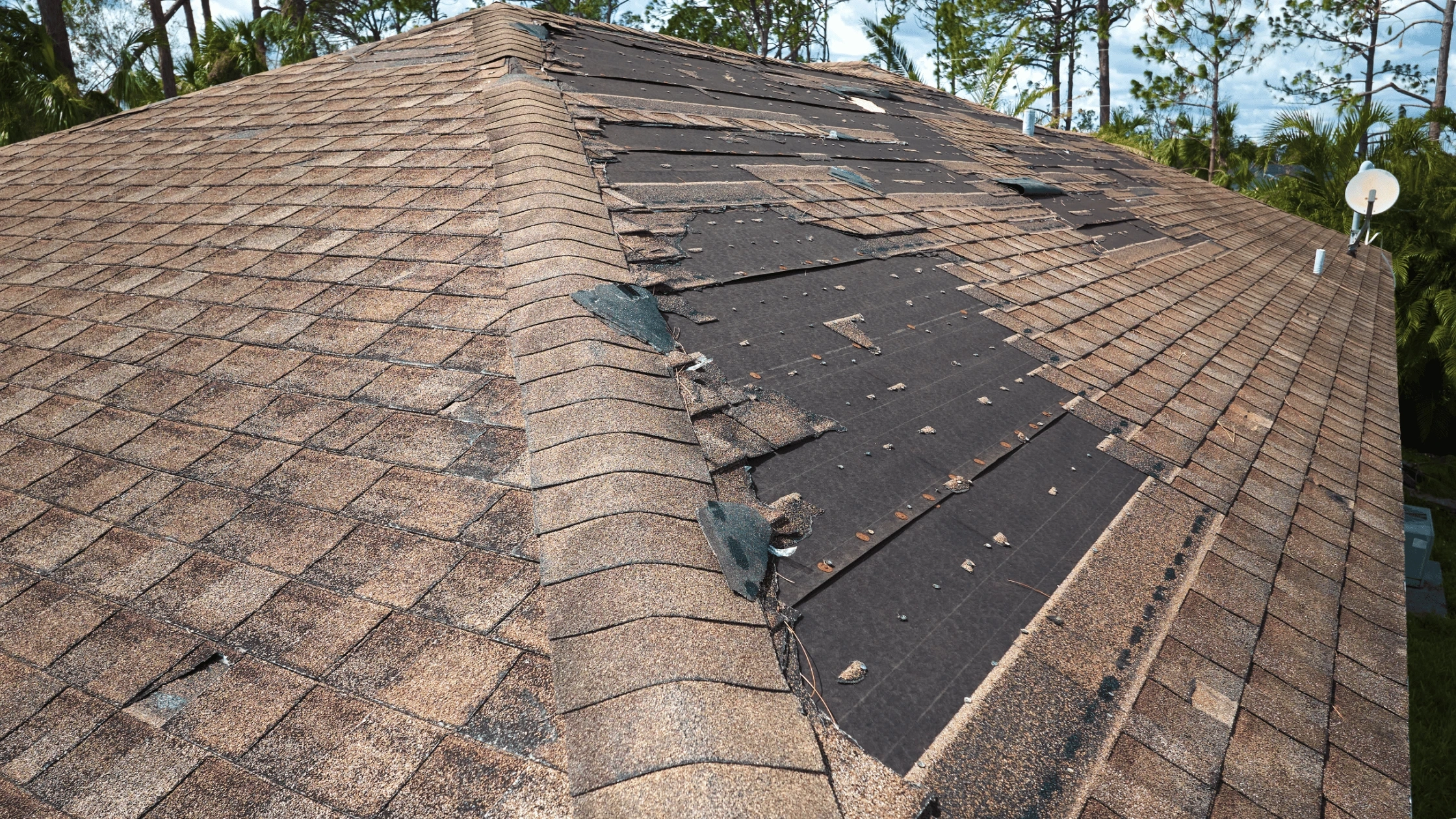
- Missing, curled, or lifted shingles along edges and ridgelines.
- Cracked or slipped tiles after wind-driven rain.
- Granules collecting in gutters are a sign that shingles are wearing down.
- Bent or separated flashing around chimneys, vents, and skylights.
- Overflowing gutters or sagging sections from clogged downspouts.
- Water stains or peeling paint on fascia boards.
These outdoor clues often confirm monsoon roof damage.
Roof Leak After Heavy Rain: Why It Happens
Many homeowners notice a roof leak after heavy rain but not light rain. The reason is pressure, not just water volume.
Heavy rain combined with wind pushes water sideways and under roofing material. A worn seam can handle drizzle but not a full storm.
Water can travel along the decking before it drips through your ceiling. That is why the leak may appear far from the real entry point.
This pattern is a common sign of monsoon roof damage.
Flat Roofs: Check for Ponding Water
Flat roofs are common across Albuquerque homes and businesses. They face a special risk: ponding water on a flat roof.
A little standing water after a storm is normal. The problem starts when water will not drain.
Industry standards call this ponding water once it sits for more than 48 hours.
- One inch of standing water adds about five pounds per square foot.
- Ponding wears down TPO, EPDM, and modified bitumen membranes faster.
- Look for dark stains, blistering, or soft spots near drains.
- Clear roof drains and scuppers, since clogs are the top cause of ponding.
What to Do After a Monsoon Roof Leak
A leak is stressful, but quick action limits the damage. Follow these steps after a monsoon roof leak.
These steps limit monsoon roof damage before it spreads.
- Protect the inside. Move belongings away and place a bucket or tarp under the leak.
- Document the damage. Take photos and videos, and note the storm date.
- Skip the roof climb. Wet roofs after storms are too dangerous for DIY repairs.
- Book a professional inspection soon. A small leak often hides bigger damage underneath.
- Call your insurance company if the storm caused the damage. Keep your photos and reports together.
Monsoon Roof Repair Albuquerque: Cost Guide

Monsoon roof repair Albuquerque costs depend on the type and extent of monsoon roof damage. The numbers below are estimates, not a final quote.
Repair Type | Typical Cost | What’s Usually Involved |
Minor repair | $250 – $750 | Resealing flashing, replacing a few shingles or tiles, or patching a small membrane area |
Moderate repair | $750 – $2,500 | Repairing a roof valley, fixing multiple sections, correcting gutter or drainage issues |
Major repair | $2,500 – $8,000+ | Replacing saturated decking, repairing a larger membrane section, and correcting structural drainage correction |
Several factors affect your final price.
- How long did the damage go unnoticed before repair?
- The roofing material on your home or building.
- How easy it is to access your roof safely.
- Whether your insurance policy covers storm-related damage.
A free inspection gives you the most accurate number. Two roofs with the same leak can need very different repairs.
Why Choose RMC Roofing & Construction LLC
RMC Roofing & Construction LLC is a veteran- and family-owned roofing and construction company based in the Greater Albuquerque area, proudly serving homeowners and businesses throughout New Mexico. We bring decades of hands-on experience and a strong reputation for delivering durable, high-quality roofing solutions.
- Licensed, insured, and experienced across hundreds of New Mexico roofs
- Experts in long-lasting, energy-efficient roofing systems
- Full services: roof repair, replacement, inspection, maintenance, and new installations
- Serving homes, offices, warehouses, and commercial properties in Albuquerque, Corrales, Westgate Heights, Huning Castle, Old Town, Nob Hill, and surrounding areas
- Honest, transparent, customer-first approach
- Roofs built to withstand New Mexico hail, storms, heat, and weather extremes
Conclusion
Monsoon roof damage rarely shows up all at once. A small stain or slow drip is often the first warning.
Catching monsoon roof damage early can save you thousands in repair costs. Use this for updates, project highlights, and customer reviews.
Stay connected! See our latest work and tips by visiting us on Facebook, Instagram, Google Business Profile, and YouTube.
Contact us today to schedule your inspection or get a free quote.
Frequently Asked Questions
What is monsoon roof damage?
Monsoon roof damage is harm caused by heavy seasonal rain, wind, and hail. In Albuquerque, it often shows up as leaks, ponding water, or damaged flashing.
What are the first signs of roof water damage after a storm?
The earliest signs of roof water damage after a storm are ceiling stains and musty odors. Missing shingles and damaged flashing are common outdoor signs.
Why does my roof leak after heavy rain but not light rain?
Heavy rain adds pressure that light rain does not. Wind-driven water gets pushed under the roofing material instead of running off the edge.
How long can water sit on a flat roof before it causes damage?
Standing water becomes a problem after about 48 hours. This is called ponding water on a flat roof, and it should be checked.
What should I do if I find ponding water on my flat roof?
Check that drains and scuppers are clear of debris first. If the water still will not drain, call a roofing professional.
